In the vast landscape of modern software development, few concepts are as deceptively simple yet profoundly critical as random number generation. From securing your online transactions to shuffling cards in your favorite game, Java's random number generators (RNGs) underpin countless real-world applications. Understanding their specific strengths, weaknesses, and appropriate use cases isn't just a technical detail; it's a fundamental aspect of building robust, secure, and performant systems. This guide will walk you through the practical examples where Java's RNGs truly shine, and crucially, where missteps can lead to catastrophic failures.
At a Glance: Key Takeaways
- Diverse Needs, Diverse Tools: Java offers specialized RNG classes like
Random,SecureRandom,ThreadLocalRandom, andSplittableRandom, each optimized for different scenarios. - Security First: For cryptographic keys, tokens, or any security-sensitive application,
SecureRandomis your only viable choice. Never compromise here. - Performance in Parallel:
ThreadLocalRandomdramatically boosts performance in multi-threaded environments by eliminating contention. - Reproducibility for Simulations:
SplittableRandomallows for deterministic sequences, making it ideal for testing and complex simulations where results need to be re-run and analyzed. - Avoid Common Pitfalls: Don't repeatedly instantiate
Random, beware of predictable seeds, and understand the dangers of weak randomness.
The Unseen Hand: Why Randomness Matters Everywhere
Think for a moment about the digital experiences you encounter daily. When you log into an app, how is your session token generated? When a game deals you a hand of poker, what ensures it's fair? When a financial model predicts market fluctuations, how does it account for unforeseen variables? The answer, in many cases, lies in the intelligent application of random number generation.
Java, as a stalwart of enterprise and application development, provides a robust toolkit for generating these seemingly unpredictable sequences. Yet, the term "random" itself is nuanced in computing. Most computer-generated "random" numbers are, in fact, pseudorandom: they're produced by deterministic algorithms that only appear random. True randomness, often derived from physical phenomena (like atmospheric noise or hardware events), is far harder to acquire and is typically reserved for the most critical security functions.
The choice of which Java RNG to use profoundly impacts an application's security, performance, and reliability. Picking the wrong one can expose you to vulnerabilities, slow down your system, or even invalidate your statistical analysis. Let's delve into Java's specific offerings and where they fit into the real world.
Navigating Java's Random Number Generators: Your Toolkit
Java provides a rich set of classes for generating random numbers, each with its own design philosophy and sweet spot. Understanding these differences is your first step toward effective implementation.
java.util.Random: The Workhorse for Simplicity
At its core, java.util.Random is Java's oldest and most straightforward random number generator. It relies on a Linear Congruential Generator (LCG) algorithm. This means it's fast and generally sufficient for tasks where perfect unpredictability isn't a strict requirement, and security isn't paramount.
Real-world Examples:
- Simple Game Mechanics: Imagine a basic game where you need to randomly choose an enemy's movement direction (up, down, left, right) or determine if a common item drops.
Randomis perfectly adequate here.
java
// Example: Randomly choosing a direction
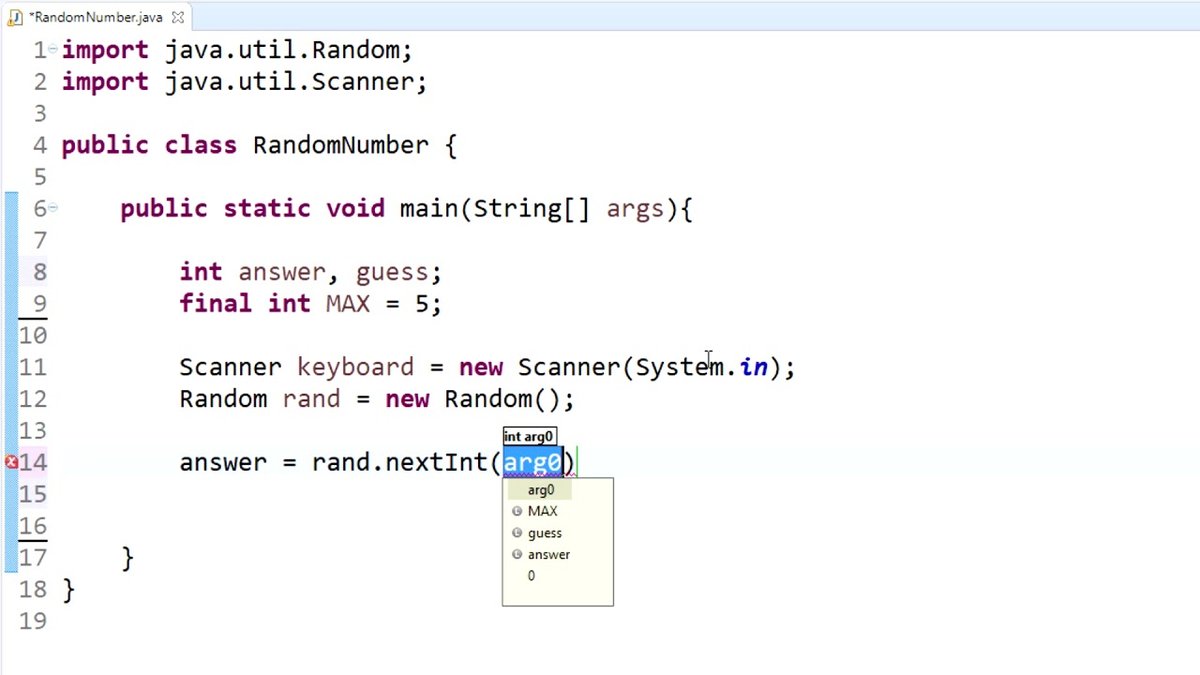
Random random = new Random();
int direction = random.nextInt(4); // 0=up, 1=down, 2=left, 3=right
System.out.println("Moving in direction: " + direction); - Non-Sensitive Data Generation: For generating simple, non-sensitive IDs, temporary filenames, or placeholder data during development,
Randomoffers a quick solution. - Basic Simulations: When you need a quick, single-threaded simulation for a non-critical process, like distributing objects in a simple graphical layout,
Randomcan get the job done without much overhead.
Caveat: BecauseRandomis based on an LCG, if its initial seed is known, its entire sequence of numbers can be predicted. This makes it unsuitable for any security-sensitive application.
java.security.SecureRandom: The Guardian of Security
When the stakes are high—think financial transactions, user authentication, or data encryption—java.security.SecureRandom is your indispensable ally. Unlike Random, SecureRandom uses cryptographically strong algorithms designed to resist prediction and tampering. It typically leverages hardware-level entropy sources (like system noise or user input timings) to generate truly unpredictable seeds, making its output suitable for applications where security is paramount.
Real-world Examples:
- Cryptographic Key Generation: The bedrock of secure communication. When generating symmetric encryption keys (AES, DES) or asymmetric key pairs (RSA, ECC) for TLS/SSL, VPNs, or SSH,
SecureRandomensures the keys are truly random and cannot be guessed. This is fundamental to how modern cryptography leverages randomness. - Session Tokens and Authentication: Every time you log in to a secure website, a unique session token is often generated to identify your session.
SecureRandomis vital for creating these tokens, preventing session hijacking attempts where an attacker might try to guess a valid token.
java
// Example: Generating a secure session token
SecureRandom secureRandom = new SecureRandom();
byte[] token = new byte[32]; // 32 bytes = 256 bits of randomness
secureRandom.nextBytes(token);
String sessionToken = Base64.getEncoder().encodeToString(token);
System.out.println("Secure session token: " + sessionToken); - Password Resets and One-Time Passcodes (OTPs): The random codes sent to your phone or email for password resets or two-factor authentication must be unpredictable.
SecureRandomensures these temporary codes cannot be brute-forced or predicted by attackers. - Salting Passwords: When storing user passwords, it's critical to "salt" them with a unique, random value before hashing. This prevents rainbow table attacks.
SecureRandomprovides the necessary unpredictability for these salts.
Critical Note: Always useSecureRandomfor any scenario where the random numbers could impact security or privacy. The performance overhead, while present, is negligible compared to the cost of a security breach.
java.util.concurrent.ThreadLocalRandom: Performance in Parallel
In today's multi-core, multi-threaded applications, contention can be a serious bottleneck. java.util.Random isn't thread-safe without external synchronization, which hurts performance. java.util.concurrent.ThreadLocalRandom, introduced in Java 7, solves this problem by providing a separate, independent random number generator for each thread. This significantly reduces contention and can offer substantial performance improvements (often 400x higher throughput in multi-threaded applications on multi-core systems) over shared Random instances.
Real-world Examples:
- High-Performance Gaming Servers: In an online multiplayer game, many threads might simultaneously need to calculate random events (e.g., critical hit chances, loot drops, AI decisions).
ThreadLocalRandomensures these calculations are fast and don't block each other, contributing to smooth gameplay and responsiveness. - Concurrent Data Processing: Imagine a data pipeline where multiple threads are processing large datasets, each needing to perform random sampling or generate random values for data augmentation.
ThreadLocalRandomallows each thread to operate independently without synchronization overhead. - Simulation Engines (Multi-threaded): For complex scientific or financial simulations running on multiple cores, where each core needs its own stream of random numbers to model independent sub-processes,
ThreadLocalRandomis a performance champion. This becomes particularly important in advanced Java game development techniques.
java
// Example: Concurrent random number generation
import java.util.concurrent.ThreadLocalRandom;
import java.util.concurrent.ExecutorService;
import java.util.concurrent.Executors;
public class ConcurrentRandomDemo {
public static void main(String[] args) {
ExecutorService executor = Executors.newFixedThreadPool(4);
for (int i = 0; i < 10; i++) {
executor.submit(() -> {
int randomNumber = ThreadLocalRandom.current().nextInt(100);
System.out.println(Thread.currentThread().getName() + " generated: " + randomNumber);
});
}
executor.shutdown();
}
} - Load Testing and Stress Testing: When simulating a high volume of users or requests, each "virtual user" thread might need to generate random inputs or delays.
ThreadLocalRandomprovides the necessary performance for such scenarios.
Key Advantage: You don't create an instance; you simply callThreadLocalRandom.current(). This makes it exceptionally lightweight and easy to use in concurrent contexts.
java.lang.Math.random(): The Quick-and-Dirty Double
Math.random() is often the first random number generator many Java developers encounter. It's a static method that returns a double value between 0.0 (inclusive) and 1.0 (exclusive). Internally, it delegates its calls to a shared java.util.Random instance.
Limitations:
- Limited Control: It only produces
doubles in a fixed range, requiring extra steps for integers or other ranges. - Weak Randomness: Inherits the predictability of
java.util.Random, making it unsuitable for security-sensitive tasks. - Shared Instance: Because it uses a shared
Randominstance, it suffers from the same potential for contention and performance bottlenecks in multi-threaded environments as manually sharedRandomobjects.
Recommendation: For most real-world applications beyond the simplest single-threaded script or educational example,Math.random()is generally not recommended. Opt for the more specializedRandomvariants for better control, performance, or security.
java.util.SplittableRandom: Reproducibility and Speed
Introduced in Java 8, SplittableRandom is a powerful, non-blocking RNG designed for high-performance, single-threaded operations and parallel computing scenarios where reproducibility is key. It achieves excellent speed (5-10x faster than Random in single-threaded use) by being explicitly non-thread-safe and allowing its internal state to be "split" into new, independent SplittableRandom instances.
Real-world Examples:
- Monte Carlo Simulations: In finance, engineering, or scientific research, Monte Carlo methods involve running vast numbers of simulations to model complex systems.
SplittableRandomis perfect here because it offers both speed and the ability to reproduce specific simulation runs by using a known seed. This is key to mastering Monte Carlo simulations.
java
// Example: Deterministic simulation with SplittableRandom
SplittableRandom sr = new SplittableRandom(12345L); // Seed for reproducibility
double result1 = sr.nextDouble();
double result2 = sr.nextDouble();
System.out.println("Deterministic results: " + result1 + ", " + result2);
// Splitting for parallel sub-simulations
SplittableRandom srForked = sr.split(); // A new independent RNG derived from sr - A/B Testing and Experimentation: When conducting online experiments, you need to randomly assign users to different groups (A or B) in a reproducible way.
SplittableRandomallows you to define the initial state, ensuring that if you re-run an experiment with the same seed, you get the same assignments, which is crucial for verifying results. - Machine Learning Data Shuffling: Before training a machine learning model, data often needs to be randomly shuffled to prevent bias.
SplittableRandomcan perform this shuffling quickly and deterministically, which is valuable for debugging and ensuring consistent training runs. - Game Level Generation (Procedural): For games that procedurally generate levels,
SplittableRandomallows developers to provide a "world seed." Players can share this seed to experience the exact same procedurally generated world, enhancing replayability and community features. - Testing and Debugging: When testing algorithms that rely on randomness,
SplittableRandomlets you provide a seed to make the tests deterministic. This means bugs related to random inputs can be consistently reproduced and fixed, which is a key tenet of advanced Java testing strategies.
Key Feature: Thesplit()method is powerful. It generates a newSplittableRandominstance that is statistically independent of the original, but whose sequence is still derived from the parent's state. This makes it ideal for parallel streams or tasks where each worker needs its own stream of reproducible randomness.
java.util.random.RandomGenerator (Java 17+): The Future of RNG
Java 17 introduced the RandomGenerator interface, a significant step towards standardizing and unifying Java's approach to random number generation. It provides a common API for various RNG algorithms, allowing developers to easily swap out implementations based on their specific needs (security, speed, period, etc.) without changing their core logic.
This interface comes with a factory (RandomGeneratorFactory) to discover and instantiate different RandomGenerator implementations. It also includes methods for generating various primitive types (int, long, double, boolean) and ranges.
Benefits:
- Algorithm Agnostic: Code written against
RandomGeneratoris future-proof and can easily switch between different algorithms (e.g., LCG, Xoroshiro, Mersenne Twister) provided by various implementations. - Configurable Ranges: Easier to generate numbers within specific ranges, reducing common off-by-one errors.
- Improved Discoverability: The factory makes it easier to find and use high-quality, specialized RNGs that might be bundled with Java or provided by third parties.
Real-world Examples (Future-proofing): - Modular Libraries: Libraries that require random numbers can depend on
RandomGeneratorto allow their users to plug in the best RNG for their environment or specific use case. - Scientific Computing Platforms: Research platforms can leverage
RandomGeneratorto ensure they're using statistically sound and high-quality algorithms for their simulations, allowing easy upgrades to newer, better generators as they become available. - Any application built with Java 17+: By programming to the
RandomGeneratorinterface rather than specific classes, you gain flexibility and maintainability.
Common Use Cases: Deep Dives and Best Practices
Now that we've explored Java's specific RNG classes, let's connect them directly to common application domains, focusing on practical implementation and critical considerations.
1. Machine Learning: Enhancing Training and Evaluation
Randomness is fundamental in machine learning, particularly in data preparation and model training.
- Data Shuffling: Before feeding data to a neural network or training algorithm, you often need to shuffle it to prevent the model from learning biases due to the order of data.
- Recommendation:
SplittableRandom(for reproducible shuffling, especially during testing/debugging) orThreadLocalRandom(for parallel data loading/preprocessing). - Random Sampling: Techniques like bootstrapping or cross-validation require randomly selecting subsets of data.
- Recommendation:
SplittableRandomfor controlled, reproducible sampling, orThreadLocalRandomfor performance in multi-threaded data processing. - Initialization of Model Weights: Neural network weights are typically initialized with small random values to break symmetry and aid learning.
- Recommendation:
RandomorThreadLocalRandom(if done concurrently) are usually sufficient, as these values don't need cryptographic strength. - Dropout: A regularization technique where randomly selected neurons are "dropped out" during training to prevent overfitting.
- Recommendation:
ThreadLocalRandomfor high-performance, concurrent training.
2. Monte Carlo Testing & Simulation: Forecasting the Future
Monte Carlo methods are powerful computational algorithms that rely on repeated random sampling to obtain numerical results. They are used across diverse fields to model complex systems where deterministic solutions are intractable.
- Financial Risk Assessment: Simulating market movements, portfolio performance under various scenarios, or option pricing.
- Engineering Design: Stress testing designs, simulating fluid dynamics, or analyzing reliability.
- Scientific Research: Modeling particle interactions, weather patterns, or biological processes.
- Recommendation:
SplittableRandomis the star here. Its speed and, crucially, its ability to be seeded for reproducibility make it ideal for running many iterations, splitting tasks across threads, and then debugging or verifying specific simulation paths. For cryptographically secure simulations (e.g., simulating attacks),SecureRandomwould be necessary, but this is less common.
3. Gaming: Fairness, Fun, and Functionality
Randomness is the soul of many games, ensuring unpredictability and replayability.
- Dice Rolls and Card Shuffling: Ensuring every roll of the dice or shuffle of a deck is fair and unpredictable.
- Recommendation: For single-player or non-critical online games,
Randomis often sufficient. For high-stakes gambling or competitive online multiplayer games where fairness is paramount and cheating is a concern, considerSecureRandomfor critical events, althoughThreadLocalRandomoften provides the necessary performance for frequent, less sensitive game events. - Loot Drops and Item Generation: Determining what items players receive or how they are enchanted.
- Recommendation:
RandomorThreadLocalRandom(for concurrent servers). - Procedural Content Generation: Creating random levels, quests, or worlds.
- Recommendation:
SplittableRandomis excellent for this, especially with seed sharing to allow players to revisit or share interesting generated content. - AI Decision Making: Introducing variability in enemy behavior.
- Recommendation:
RandomorThreadLocalRandom.
4. Statistics and Sampling: Ensuring Data Quality
In statistics, random selection is crucial for drawing valid conclusions from data.
- Random Sampling: Selecting a representative subset from a larger dataset for analysis, surveys, or A/B testing.
- Permutations and Combinations: Randomly ordering elements or selecting unique groups.
- Recommendation:
Randomfor basic tasks. For controlled experiments and reproducible statistical analysis,SplittableRandomis highly valuable. When selecting data for a privacy-sensitive study, considerSecureRandomto prevent any possibility of bias or prediction in the selection process, which could compromise anonymity. - Validation of Distribution Quality: For rigorous statistical work, it's essential to ensure your RNG produces numbers that follow the desired distribution.
- Best Practice: Always validate the output of your chosen RNG through iterative experiments, especially when working with custom distributions or complex transformations.
5. Security: The Non-Negotiable Imperative
As highlighted earlier, security applications demand the highest standard of randomness. Flaws here lead to critical vulnerabilities.
- Cryptographic Keys: Generation of private keys, session keys, and nonce values.
- Authentication Tokens: Session IDs, CSRF tokens, OAuth tokens.
- Password Salting: Unique random salts to protect hashed passwords.
- Randomized Algorithms: Security protocols that incorporate randomness (e.g., for padding, challenges).
- Recommendation: Exclusively
java.security.SecureRandom. Never, ever useRandom,Math.random(),ThreadLocalRandom, orSplittableRandomfor security-critical functions. The potential for catastrophic vulnerabilities is too high. Always ensure yourSecureRandominstance is properly seeded and managed.
Dangers of Insecure Random Number Generation
The consequences of choosing the wrong RNG or misusing the correct one can be devastating. This isn't theoretical; real-world systems have been compromised due to weak randomness.
- Compromised Cryptographic Communications: If the random numbers used to generate keys for TLS, VPNs, or SSH are predictable, an attacker can guess the keys and decrypt sensitive communications. This has led to major security incidents.
- Authentication Bypass: Predictable session tokens, password reset codes, or API keys allow attackers to impersonate users or gain unauthorized access.
- Data Collisions and Integrity Breaches: Weak randomness in hashing algorithms or UUID generation can lead to collisions, undermining data integrity or allowing for denial-of-service attacks.
- Privacy Leaks: If random sampling in a privacy-preserving system isn't truly random, it could expose patterns that lead to re-identification of individuals.
- Safety Hazards in Critical Systems: In systems controlling physical infrastructure (e.g., smart grids, industrial control systems), predictable random numbers could be exploited to cause malfunctions or safety failures.
The key takeaway is this: for anything touching confidentiality, integrity, or availability, err on the side of caution and always useSecureRandom. It's not just good practice; it's a security mandate.
Important Considerations and Best Practices
Beyond choosing the right class, how you use the random number generator is equally important.
- Avoid Repeated Instantiation of
Random: Creating anew Random()instance repeatedly in a tight loop is inefficient and can lead to less random sequences, especially if they are created rapidly. Instead, create one instance and reuse it.
- Better:
Random sharedRandom = new Random();and passsharedRandomaround or make it a field.
- Use
ThreadLocalRandomfor Concurrency: As discussed, for multi-threaded applications,ThreadLocalRandom.current()is vastly superior in performance and prevents contention. - Always Use
SecureRandomfor Security: This point cannot be overstressed. Passwords, tokens, keys, salts – all demandSecureRandom. - Be Careful with Seeding:
- Deterministic vs. Non-Deterministic: Seeding an RNG with a known value (
new Random(seed)ornew SplittableRandom(seed)) makes its sequence predictable. This is great for testing and reproducible simulations but catastrophic for security. - Secure Seeding:
SecureRandomhandles its own seeding from high-entropy sources. Do not explicitly seedSecureRandomyourself unless you fully understand the cryptographic implications and are providing truly random, high-entropy data.
- Understand Value Ranges to Prevent Off-by-One Errors:
nextInt(bound)returns a value from 0 (inclusive) tobound(exclusive). So,random.nextInt(10)gives 0-9.- To get a range like 1-10, you'd use
random.nextInt(10) + 1. - For a general range
[min, max](inclusive), userandom.nextInt(max - min + 1) + min. nextDouble()returns 0.0 (inclusive) to 1.0 (exclusive).
- Don't Over-Randomize: Sometimes, a truly random approach isn't needed or even desirable. For example, assigning unique IDs that are sequential might be better than random ones if you need order. Always evaluate if randomness genuinely adds value or is simply a default choice.
Choosing Your Java RNG: A Decision Guide
Here's a quick summary to help you pick the right tool for the job:
| Use Case Category | Recommendation | Key Reason |
|---|---|---|
| Cryptography/Security | java.security.SecureRandom | Cryptographically strong, resists prediction, uses hardware entropy. Essential for keys, tokens, passwords. |
| Multi-Threaded Applications | java.util.concurrent.ThreadLocalRandom | High performance, avoids contention, thread-local instances. Ideal for concurrent game servers, data processing. |
| Testing & Deterministic Simulations | java.util.SplittableRandom | Fast, allows explicit seeding for reproducibility, state can be split for parallel deterministic tasks. |
| Basic, Single-Threaded Non-Security Needs | java.util.Random | Simple, fast, sufficient for basic game mechanics, non-sensitive data. |
| General Purpose (Java 17+) | java.util.random.RandomGenerator (interface) | Flexible, algorithm-agnostic standard for various types and ranges. Future-proof. |
| Quick Double (NOT Recommended for most apps) | java.lang.Math.random() | Delegates to Random, fixed double range, weak randomness. Limited control, potential for contention. |
Beyond the Basics: Advanced Considerations
As you delve deeper into Java's random number capabilities, you might encounter more specialized needs. For instance, generating random numbers that follow a specific non-uniform distribution (e.g., Gaussian/Normal, Poisson) often requires additional mathematical transformations on the output of the base RNG. Libraries like Apache Commons Math provide rich functionalities for this.
Furthermore, the quality of a pseudorandom number generator is often assessed by its statistical properties (e.g., period length, uniformity, independence). While Random is generally good enough for simple tasks, SplittableRandom and the generators accessible via RandomGenerator often implement more sophisticated algorithms (like Xoroshiro128Plus or Londa) that offer superior statistical properties and longer periods, making them more suitable for rigorous scientific or large-scale simulations where statistical significance is critical. You can learn more about Java's random number generators to better understand these statistical nuances.
Conclusion: Master Randomness, Build Better Software
From the intricate dance of cryptographic keys securing our digital lives to the subtle fairness in a virtual dice roll, random number generators are silent workhorses in the Java ecosystem. By understanding the distinct purposes and limitations of Random, SecureRandom, ThreadLocalRandom, SplittableRandom, and the newer RandomGenerator interface, you equip yourself with the knowledge to make informed decisions.
Remember: performance is important, but security is non-negotiable. Choose SecureRandom when anything sensitive is at stake. Embrace ThreadLocalRandom for concurrent speed. Leverage SplittableRandom for reproducible simulations and testing. And always, always be mindful of how your chosen RNG impacts the integrity, security, and efficiency of your application. Master randomness, and you're well on your way to building more robust, secure, and enjoyable software.