In the world of programming, randomness is anything but random. Especially in Java, generating numbers that appear arbitrary, non-patterned, and unpredictable is a crucial capability underpinning everything from fair gameplay and one-time password (OTP) codes to the robust security of cryptographic systems. But what exactly are we talking about when we say "random," and how does Java make it happen?
At its core, Java's approach to randomness relies on pseudorandom number generators (PRNGs). Unlike true random numbers, which are truly unpredictable, PRNGs are algorithms that produce sequences of numbers that look random but are entirely determined by an initial value known as a seed. Start with the same seed, and you'll always get the same sequence of "random" numbers. Understanding this distinction is key to harnessing Java's capabilities effectively.
Decoding Pseudorandomness and the Power of Seeds
The concept of pseudorandomness might seem counterintuitive at first glance. If the numbers aren't truly random, how can they be useful? The genius of PRNGs lies in their ability to generate sequences so complex and long that, for most practical purposes, they are indistinguishable from true randomness. This predictability, tied to the seed, can even be an advantage, allowing for reproducible simulations or debugging where the "random" sequence needs to be replayed.
Choosing and managing your seed is a fundamental decision when working with random number generators in Java. Whether you explicitly set it for reproducibility or allow the system to generate a non-deterministic one for maximum "randomness," it directly influences the output. For a deeper dive into this foundational concept, including how seeds work and why they are so vital for controlling your number sequences, you should Explore Java seeds and randomness.
Java's Toolkit for Random Number Generation
Java provides a suite of classes, each tailored for different random number generation needs. Knowing which tool to pick is paramount for optimal performance and security.
The Everyday Workhorse: java.util.Random
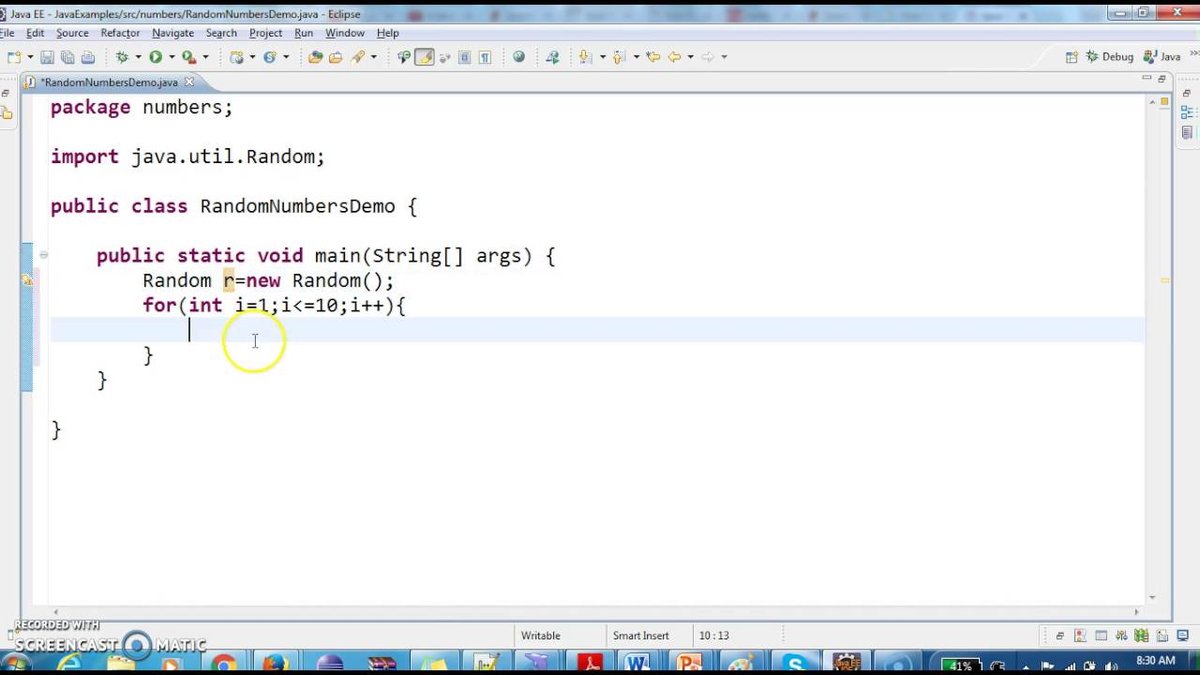
For most general-purpose scenarios where strict cryptographic security isn't required, java.util.Random is your go-to class. It's simple, efficient, and capable of generating a wide variety of pseudorandom values, including integers, longs, booleans, floats, and doubles. This class serves as a solid foundation for many applications.
Crafting Specific Random Values with Precision
Beyond just knowing which class to use, mastering the methods within these classes allows you to generate precisely the kind of random number you need. Perhaps you need a random integer within a specific range, a double between 0.0 and 1.0, or even an array of random bytes. Java offers straightforward methods to achieve this precision.
For example, generating a random integer x where min <= x <= max can be done reliably using the nextInt() method with some clever arithmetic. Similarly, nextDouble() provides a simple way to get a random floating-point value. To truly master these techniques and learn how to generate everything from simple integers to complex numerical ranges, it's worth taking the time to Generate specific Java random numbers Learn.
The Security Specialist: java.security.SecureRandom
When your application deals with sensitive data – such as generating cryptographic keys, session tokens, or secure one-time pads – java.util.Random simply won't cut it. In these high-stakes scenarios, you need java.security.SecureRandom. This class provides cryptographically strong random numbers, making it significantly harder for malicious actors to predict the generated sequences. It's designed with security as its primary concern, employing more robust algorithms and sources of entropy. To understand the critical role this class plays in securing your applications and how to implement it correctly, you’ll want to review our guide on Java Secure Random Number Generation.
The Multithreaded Powerhouse: java.util.concurrent.ThreadLocalRandom
Modern Java applications often run in multithreaded environments, where multiple threads are executing code concurrently. Sharing a single java.util.Random instance across multiple threads can lead to contention, severely impacting performance. This is where java.util.concurrent.ThreadLocalRandom shines. It provides each thread with its own independent PRNG instance, eliminating contention and dramatically improving performance in concurrent scenarios. This class leverages an internally generated, non-modifiable seed, ensuring both uniqueness and efficiency per thread.
Best Practices and Performance Considerations
Choosing the correct random number generator is a foundational best practice. As Donald Knuth wisely noted, "Random numbers should not be generated with a method chosen at random." Beyond selection, proper usage is also crucial.
- Avoid sharing
java.util.Randominstances across multiple threads; useThreadLocalRandominstead. - Explicitly set seeds for testing or situations requiring reproducible sequences.
- Always opt for
SecureRandomwhen cryptographic strength is a non-negotiable requirement.
By adhering to these guidelines, you can ensure your applications are both robust and performant. For a deeper exploration of optimal strategies, including detailed performance benchmarks and comprehensive best practices, make sure to consult our guide on Performance and Best Practices for.
Getting Started: Basic Implementation
Now that you understand the different tools Java offers and when to use them, you're ready to start implementing them in your code. Getting a basic random number generator up and running is straightforward, but understanding the nuances will elevate your coding. Whether you're building a simple game or a complex simulation, knowing the right way to initialize and use these classes is essential. If you’re eager to jump right into coding and see these concepts in action with practical examples, our essential guide will help you Generate Java random numbers. Learn Java.
Ultimately, mastering random number generation in Java means understanding the underlying pseudorandomness, choosing the right class for your specific needs (general, secure, or multithreaded), and applying best practices for seed management and performance. This knowledge empowers you to build applications that are not only functional but also secure and efficient. Continue exploring our in-depth guides to further refine your skills and leverage Java's powerful random number generation capabilities to their fullest potential.